
Introduction
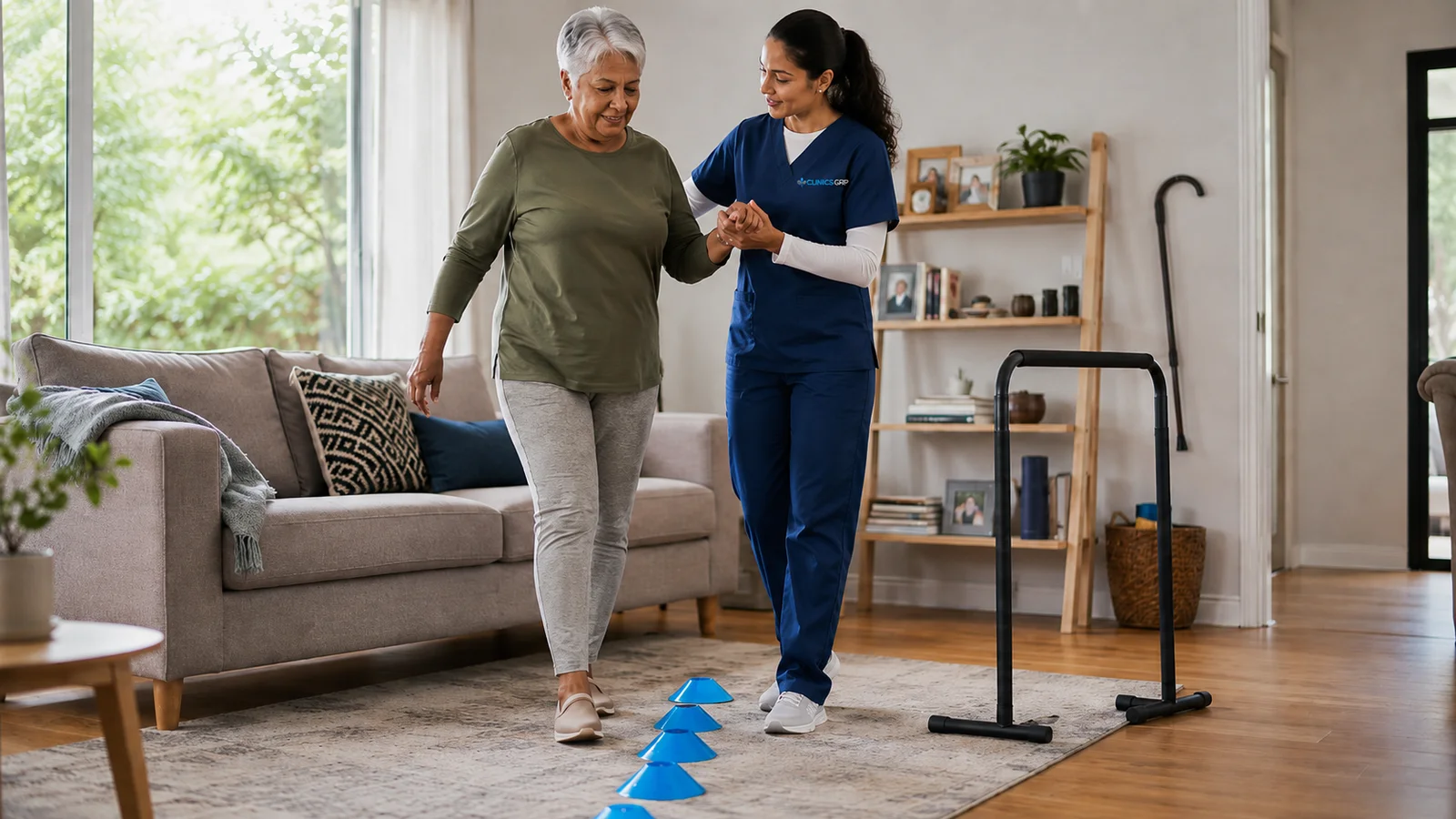
Home physiotherapy is physiotherapy delivered in a person’s own home, supported living environment, retirement village or residential aged care setting. For many older adults, receiving physiotherapy at home can make care more accessible, practical and relevant to everyday life.
A home visit allows the physiotherapist to understand how a person moves in the environment they use every day. This may include standing from a chair, walking through hallways, using stairs, getting in and out of bed, accessing the bathroom, moving around the kitchen, managing outdoor paths or practising exercises in a familiar space.
Home physiotherapy may be helpful when mobility, strength, balance, confidence or everyday function has changed. It may also support recovery after a hospital stay, illness, surgery, injury or fall. The aim is not simply to “do exercises”, but to help the person work towards meaningful daily activities in a way that is safe, realistic and matched to their current health needs.
Clinics GRP Physiotherapy provides home-based support as part of the broader Clinics GRP model of whole-of-ageing care. This means physiotherapy can connect with related pathways such as rehabilitation, balance and falls support, vestibular care, therapeutic exercise, nursing, remedial massage therapy and healthy ageing education where appropriate.
Key points
- Home physiotherapy brings assessment, therapy, exercise support, education and practical advice into the person’s own environment.
- It may support older adults with mobility, balance, strength, walking confidence, pain, post-hospital recovery, falls risk and everyday function.
- A home assessment can identify practical barriers such as stairs, low chairs, rugs, lighting, bathroom access, mobility aid use or difficulty moving safely in specific areas of the home.
- Evidence supports exercise, particularly balance, functional and strengthening exercise, as an important part of falls risk reduction for many older adults.
- Home physiotherapy should be tailored to the person’s health, goals, home environment, confidence, risks and care supports.
- Funding and service pathways may include private appointments, My Aged Care pathways, home care funding, Medicare referral pathways, private health insurance or provider-funded arrangements, depending on eligibility and circumstances.
Why home physiotherapy matters
For many older adults, being able to move safely at home is closely linked to independence, dignity, confidence and quality of life. Everyday tasks such as getting out of bed, showering, dressing, making a meal, walking to the letterbox, leaving the house or attending appointments can become harder when strength, balance, mobility or confidence changes.
These changes do not always happen suddenly. Sometimes a person gradually starts doing less: walking shorter distances, avoiding stairs, sitting more, relying more on furniture for support, declining social outings, or asking family and carers for more help. Over time, reduced activity can contribute to further weakness, stiffness, reduced confidence and increased falls risk.
Home physiotherapy is useful because it places assessment and therapy in the context where the person actually lives. A person may appear safe in a clinic but still struggle with a low lounge chair, a narrow bathroom, a step into the laundry, an uneven driveway or the distance from the bedroom to the toilet at night. Seeing the home environment helps the physiotherapist provide more specific, practical recommendations.
Home physiotherapy also supports continuity. The physiotherapist can help the person, family, carers and care team understand what is changing, what can be worked on, what risks should be monitored and when other health professionals may need to be involved.
What home physiotherapy can support
Home physiotherapy can be used for many different needs. The most appropriate plan depends on the person’s health history, current function, goals and clinical presentation.
Mobility and walking
Mobility support may include assessment of walking pattern, walking speed, step length, endurance, turning, use of mobility aids and confidence walking indoors or outdoors. Therapy may involve walking practice, gait retraining, strengthening, balance work, pacing advice and strategies for moving safely around the home.
Strength and reconditioning
Older adults may lose strength and endurance after illness, surgery, hospitalisation, reduced activity or a period of pain. A physiotherapist can provide a graded strengthening and reconditioning programme that considers the person’s medical history, energy levels, symptoms, goals and safety.
This may include practising sit-to-stand, step-ups, calf raises, supported balance exercises, walking intervals, resistance exercises or task-specific movements. The programme should be reviewed and progressed over time.
Balance and falls risk
Falls risk can be influenced by many factors, including strength, balance, vision, sensation, pain, footwear, medications, dizziness, cognition, home environment, continence urgency, fear of falling and previous falls.
Physiotherapy may help identify modifiable physical and functional factors, such as reduced leg strength, poor balance reactions, difficulty turning, reduced walking confidence or difficulty getting out of a chair. The physiotherapist may also suggest GP review, medication review, optometry, podiatry, occupational therapy or vestibular assessment where relevant.
Rehabilitation after hospital, surgery or illness
After a hospital stay, surgery, infection, fall or acute illness, many older adults experience a drop in mobility, strength and confidence. Home physiotherapy may support the transition back to everyday routines by focusing on safe movement, progressive exercise, walking tolerance, transfer practice, education and monitoring.
This can be particularly important when the person has returned home but is not yet functioning at their previous level. A home-based plan may help bridge the gap between discharge and safe daily living.
Pain and movement confidence
Pain can affect how a person moves, sleeps, exercises and participates in daily life. Home physiotherapy may help by assessing movement, strength, flexibility, posture, activity patterns and aggravating tasks. Treatment may include education, exercise, pacing strategies, manual therapy where appropriate, and practical advice for daily activities.
Pain management should be individualised. If pain is new, severe, worsening, associated with trauma, or linked with other concerning symptoms, medical review may be needed.
Long-term conditions and complex health needs
Many older adults live with more than one health condition. Physiotherapy may need to consider arthritis, osteoporosis, diabetes, neurological conditions, cardiac history, respiratory conditions, dementia, frailty, dizziness, previous joint replacements or other complex presentations.
The aim is to provide a plan that is realistic and safe for the whole person, not just one body part or one symptom.
Carer and family education
Family members and carers often notice changes in movement, confidence, safety or daily function. They may also help with exercises, transport, daily routines, equipment or appointment follow-up.
Home physiotherapy can include education for carers and families about safe encouragement, what to monitor, how to support exercise routines, when to seek help and how to reduce avoidable risks without removing the person’s independence.
What to look out for
It may be worth discussing home physiotherapy with a GP, care provider or allied health clinician if an older person is experiencing:
- reduced confidence walking around the home or outside
- recent falls, near falls, trips or stumbles
- difficulty getting out of a chair, bed, car or shower
- reduced strength, endurance or balance
- walking more slowly or taking shorter steps
- pain that affects movement or daily activity
- difficulty using stairs, steps or outdoor paths
- a recent hospital admission, surgery, illness or injury
- increasing reliance on family, carers or mobility aids
- fear of falling or avoidance of normal activities
- difficulty completing a home exercise programme independently
- concern from family, carers or care staff about safety or function
- a change in ability to manage personal care, meals, shopping or community access
These signs do not always mean there is a serious problem, but they may indicate that assessment and support could be helpful.
What happens during a home physiotherapy assessment
The first home physiotherapy appointment usually starts with a discussion about the person’s goals, health history, recent changes and current concerns. The physiotherapist may ask about pain, falls, hospital admissions, medical conditions, medications, mobility aids, exercise habits, home supports and daily routines.
The assessment may include:
- observing walking indoors and, where safe, outdoors
- assessing transfers such as sit-to-stand, bed mobility or shower access
- checking balance, strength, flexibility and movement control
- reviewing stairs, steps, pathways or areas where the person feels unsteady
- considering footwear, mobility aids and equipment use
- discussing falls history, near falls or fear of falling
- reviewing current exercise or activity levels
- identifying goals that matter to the person
- discussing whether other health professionals should be involved
A home physiotherapy assessment is not about judging the home or the person. It is about understanding what is making daily life harder and identifying practical ways to support safer, more confident movement.
What can help
Home physiotherapy should be individualised. Common areas of support may include the following.
Assessment by an appropriate health professional
A physiotherapist can assess how physical capacity, symptoms, confidence and the home environment interact. This helps guide a plan that is specific to the person rather than a generic exercise list.
Education and advice
Education may include advice about movement, pacing, safe exercise, managing symptoms, using mobility aids, reducing avoidable risks and understanding when further medical or allied health input may be needed.
Exercise and movement-based support
Exercise may focus on strength, balance, walking tolerance, flexibility, coordination, confidence, reconditioning or task-specific practice. The right exercise programme should be achievable, safe and progressive.
For many older adults, useful exercise is functional. This means it connects directly to daily activities, such as standing up from a chair, stepping over a threshold, walking to the bathroom, carrying light items safely, turning, reaching, or walking on different surfaces.
Home safety and environmental considerations
The physiotherapist may discuss practical issues such as lighting, stairs, floor surfaces, rugs, cords, bathroom access, chair height, walking aid use, footwear and outdoor paths.
Some issues may require input from an occupational therapist, especially when home modifications, bathroom equipment, rails, ramps or assistive technology are being considered.
Falls risk reduction
Falls prevention is not one single exercise or one single piece of equipment. It usually involves understanding the person’s individual risk factors and then addressing the areas that can be modified.
This may include balance and strengthening exercises, walking practice, review of mobility aids, home safety changes, footwear advice, GP review, medication review, vision checks, podiatry, vestibular care or occupational therapy input.
Rehabilitation and reablement
Rehabilitation focuses on recovery after injury, illness, surgery or hospital admission. Reablement focuses on helping a person regain or maintain the ability to do daily tasks as independently as possible.
In the home, this may involve practising the exact activities the person wants or needs to do, such as preparing a meal, getting to the toilet safely, using stairs, managing the garden path or building tolerance for community outings.
Communication with the care team
Where appropriate and with consent, the physiotherapist may communicate with family, carers, GPs, home care providers, support coordinators, nurses, occupational therapists, podiatrists or other members of the care team.
This can help ensure everyone understands the person’s goals, risks, recommendations and progress.
Exercise: why individualisation matters
General activity is important for health, but older adults are not all the same. A person who is recovering after hospitalisation, living with frailty, managing dizziness, using a walking frame or experiencing pain may need a different plan from someone who is already active and confident.
A physiotherapist can help choose exercises that are appropriate for the person’s current level and goals. They can also adjust exercises if symptoms change, confidence improves, new risks appear or the person is ready for progression.
For some people, exercise may begin with supported sit-to-stands, short walking intervals or gentle balance work near a stable surface. For others, it may progress to resistance training, outdoor walking, stair practice, dual-task activities, higher-level balance work or community-based exercise.
The safest and most useful programme is usually one the person understands, can do consistently and can progress over time.
Funding and service options
Home physiotherapy may be accessed in different ways depending on the person’s circumstances, location, eligibility and care arrangements.
Possible pathways may include:
- private appointment bookings
- My Aged Care pathways, depending on assessment and eligibility
- Commonwealth Home Support Program services where available and appropriate
- Support at Home services where approved and relevant
- Home Care Package arrangements for people already receiving aged care funding
- residential aged care service arrangements
- Medicare referral pathways where clinically appropriate and arranged by a GP
- private health insurance, depending on the person’s policy
- provider-funded, referrer-funded or insurer-funded arrangements
Funding rules, programme names, inclusions and eligibility requirements can change. It is important to check current details with My Aged Care, the person’s home care provider, GP, insurer or relevant funding body.
How Clinics GRP can support you
Clinics GRP provides allied health and care services designed to support older adults, families, referrers and care teams. Depending on the person’s needs, this may include assessment, education, therapy, exercise programming, falls prevention, rehabilitation or care coordination across home, clinic, community, residential aged care and digital settings.
Clinics GRP Physiotherapy — inHome supports older adults who may find it difficult to attend a clinic or who benefit from assessment in their own environment. This may include people recovering after hospitalisation, people with reduced mobility, people at risk of falls, people living in residential aged care, or people who need practical support to maintain function at home.
A home physiotherapy appointment may include:
- discussion of goals, concerns and recent changes
- assessment of mobility, strength, balance and daily function
- observation of movement in the home environment
- exercise prescription and progression
- falls risk and home safety considerations
- advice about mobility aids or equipment use
- communication with family, carers, providers or referrers where appropriate
- recommendations for ongoing care, review or referral if needed
Clinics GRP Physiotherapy is part of the broader Clinics GRP model of whole-of-ageing clinical care. This means physiotherapy can connect with related pathways such as rehabilitation, balance and falls support, vestibular support, therapeutic exercise, nursing, remedial massage therapy and healthy ageing education where appropriate.
How to prepare for a home physiotherapy visit
Before the first appointment, it may help to have:
- a list of current health conditions
- details of recent falls, near falls or mobility changes
- hospital discharge summaries, imaging reports or GP letters if available
- a list of current medicines if relevant to the assessment
- comfortable clothing and safe footwear
- usual mobility aids, such as a walking stick or frame
- family, carer or support person present if helpful
- any questions or goals written down
It is also useful for the physiotherapist to see the areas of the home that are most relevant to the person’s goals, such as the bedroom, bathroom, stairs, entryway, living area, outdoor path or the chair they use most often.
Questions to ask before or during an appointment
Helpful questions may include:
- What is contributing to my current mobility or balance concern?
- What activities should I practise between appointments?
- Which exercises are most important for my goals?
- Are there any exercises or activities I should avoid for now?
- Do I need a review of my walking aid, footwear or home setup?
- Should I speak with my GP, pharmacist, optometrist, podiatrist or occupational therapist?
- How will we know if the plan is helping?
- When should I seek further medical advice?
When to seek urgent help
Seek urgent medical help if there is:
- sudden weakness, facial drooping, difficulty speaking or confusion
- chest pain, shortness of breath or fainting
- a fall with head injury, severe pain or inability to get up safely
- sudden severe dizziness, loss of balance or new neurological symptoms
- new loss of bladder or bowel control with weakness or numbness
- rapidly worsening pain after a fall or injury
- signs of serious infection, rapidly worsening symptoms or significant concern
In an emergency, call 000 in Australia.
Next steps
- Speak with your GP, care provider or treating health professional if there has been a change in mobility, balance, strength or confidence.
- Consider a home physiotherapy assessment if getting to a clinic is difficult or if the main concerns occur in the home environment.
- Contact Clinics GRP to discuss whether Clinics GRP Physiotherapy — inHome may be suitable.
Research sources used for clinical and admin review
This article was informed by current public health and clinical sources, including:
- My Aged Care — Help at home: https://www.myagedcare.gov.au/types-care/help-home
- My Aged Care — Maintaining your independence and mobility: https://www.myagedcare.gov.au/types-care/maintaining-your-independence-and-mobility
- Australian Government Department of Health, Disability and Ageing — Recommendations for older adults aged 65 years and over: https://www.health.gov.au/topics/physical-activity/24-hour-movement-guidelines-for-all-australians/recommendations-for-older-adults-65-years-and-over
- healthdirect Australia — Older people and falls: https://www.healthdirect.gov.au/falls
- Australian Commission on Safety and Quality in Health Care — Falls Guidelines: https://www.safetyandquality.gov.au/clinical-topics/falls
- Cochrane — Exercise for preventing falls in older people living in the community: https://www.cochrane.org/evidence/CD012424_exercise-preventing-falls-older-people-living-community